UNDIP Press indexed by :




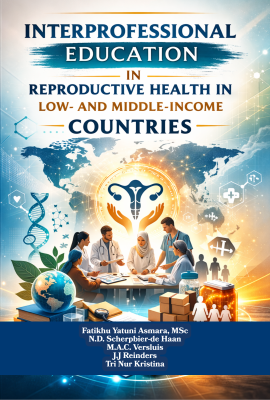
This book explores the implementation of Interprofessional Education (IPE) in low- and middle-income countries (LMICs), with a focused examination of reproductive health initiatives in Indonesia. IPE, as a collaborative learning approach among diverse health professionals, holds significant promise for improving healthcare delivery, particularly in resource-constrained settings. Indonesia’s unique demographic, cultural, and healthcare system characteristics present both challenges and opportunities for integrating IPE into reproductive health programs.
The preface sets the stage by outlining the critical need for effective interprofessional collaboration to address reproductive health disparities in LMICs. It highlights how IPE can enhance communication, teamwork, and shared decision-making among healthcare providers, ultimately leading to better patient outcomes. Emphasizing Indonesia’s context, this work delves into the socio-economic factors, healthcare infrastructure, and policy environments that influence IPE adoption and sustainability.
By documenting experiences, strategies, and lessons learned from Indonesia, this book aims to provide a comprehensive resource for policymakers, educators, and practitioners seeking to implement or strengthen IPE frameworks within reproductive health. The insights presented here contribute to the broader discourse on health workforce development and collaborative practice in LMICs, offering practical guidance for scaling IPE to improve reproductive health outcomes globally.

This work is licensed under a Creative Commons Attribution-NonCommercial-ShareAlike 4.0 International License.
UNDIP Press indexed by :
Pendaftaran Cetak Buku :